News
19.03.2026
Calambur: Discover the latest news from the European Centre for Modern Languages (ECML) – in Spanish!
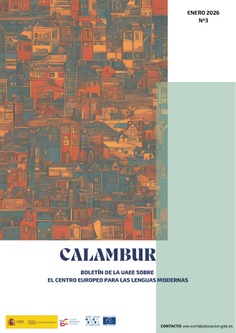 Highlights of the third issue of Calambur, the bulletin from Spain’s Acción Educativa Exterior, dedicated to the work of the ECML:
- the 90th meeting of the Bureau of the ECML Governing Board;
- ECML workshops: “CLIL teaching materials for developing 21st century competences” and “AI for language education”;
- ECML-EC Training and Consultancy: “Supporting multilingualclassrooms” in Melilla, and RELANG in the Canary Islands;
- the European Day of Languages 2025;
- upcoming ECML workshops and events;
- resources from the programme Inspiring Innovation in Language Education (2020-2023), and more.
Read the full issue
ECML web pages dedicated to Spain
Further articles and publications quoting the work of the ECML
17.02.2026
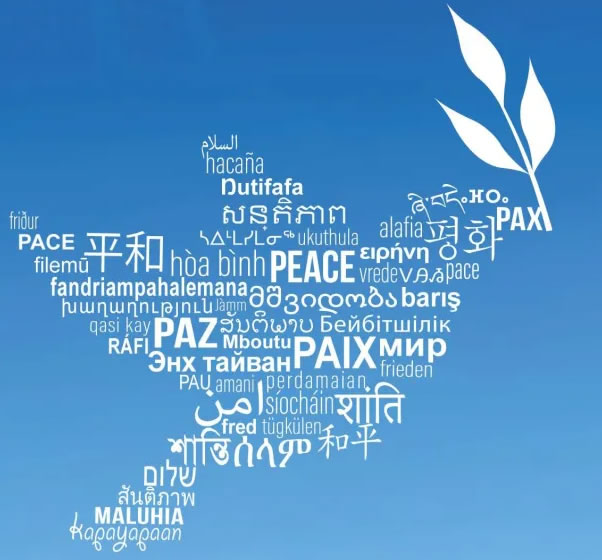
International Mother Language Day: Celebrating linguistic diversity worldwide
© UNESCO/Montakarn S. Kittipaisalsilp
International Mother Language Day takes places each year on 21 February. It was proclaimed by UNESCO in 1999 and later adopted by the UN General Assembly. The Day highlights the role of languages in promoting inclusion and achieving the UN Sustainable Development Goals.
The Day’s origins lie in the Language Movement in Bangladesh, when students campaigning for the recognition of Bengali as a state language were killed during protests in 1952. The day commemorates their sacrifice and affirms the principle that linguistic diversity and the right to use one’s mother tongue are fundamental to cultural identity and education.
Multilingual education not only promotes inclusive societies but also aids in preserving non-dominant, minority, and indigenous languages. It seeks to provide support for equitable access to education and encourage lifelong learning opportunities for all individuals.
In Europe, actions in support of the Day often take place in schools and libraries, with pupils invited to share stories, poems or songs in their home languages. In countries such as Finland, Spain (“Barcelona celebrates the International Mother Language Day”, “21 de febrero, Día internacional de la lengua materna”) and Ireland, the Day is often used to highlight regional or minority languages alongside the languages spoken by migrant communities, reinforcing the value of all linguistic backgrounds.
A range of resources is available to help schools commemorate the Day. UNESCO provides dedicated webpages, classroom materials and policy guidance on mother-tongue-based multilingual education. Organisations such as the British Council provide teaching resources. These resources encourage educators to recognise pupils’ home languages as assets rather than obstacles to learning, and to explore how language supports well-being, inclusion and academic success. Activities often include language mapping, multilingual storytelling, or discussions about how languages are used in everyday life.
International Mother Language Day shares important similarities with the Council’s European Day of Languages, celebrated on 26 September. Both promote linguistic diversity and intercultural dialogue, but they emphasise different aspects. UNESCO’s day focuses primarily on the protection and recognition of mother tongues and linguistic rights worldwide, while the European Day of Languages places greater emphasis on promoting the linguistic and cultural diversity of Europe and encouraging citizens to learn languages throughout their lives as a means of promoting plurilingualism and intercultural understanding.
International Mother Language Day also aligns closely with the Council of Europe’s broader work on language and minority rights, particularly through instruments such as the European Charter for Regional or Minority Languages and the Framework Convention for the Protection of National Minorities.
For 2026, the focus of International Mother Language Day is on “Youth voices on multilingual education”. This theme highlights young people’s role in shaping the future of multilingual education by advocating for education systems that recognise and value every learner’s language repertoire. It reflects the growing understanding that multilingualism is not only a social reality but a powerful educational approach, and that youth from diverse linguistic backgrounds are vital in promoting and keeping languages alive across communities.
Some useful resources:
www.un.org/en/observances/mother-language-day
www.unesco.org/en/days/mother-language
https://learnenglish.britishcouncil.org/general-english/magazine-zone/international-mother-language-day
www.dw.com/en/mother-language-day-what-it-is-and-why-its-important/a-71685546
03.11.2025
Supporting Multilingual Classrooms: national training workshop (8-9 October 2025, Melilla, Spain)
Local organiser: Rogelio Paniza Prados, Dirección Provincial del Ministerio de Educación, Formación Profesional y Deportes
ECML experts: Terry Lamb (United Kingdom), Catherine Carré-Karlinger (Austria)
Participants: 22 foreign language teachers, teachers of other subjects, teacher educators, teachers of the language of schooling
The training provided by the European Centre for Modern Languages of the Council of Europe (ECML) has been a truly enriching experience. The Supporting Multilingual Classrooms workshop enabled teachers in Melilla to reflect on the linguistic realities of their classrooms and to learn practical strategies for supporting students in multilingual classrooms, thereby promoting inclusive education.
Key highlights of the workshop include its collaborative approach, the exchange of experiences
among teachers, and its adaptability for implementation in our schools. Beyond enhancing teaching practices, this type of training fosters positive and meaningful attitudes that recognise and value the richness of linguistic and cultural diversity.
For all these reasons, we encourage other countries to take advantage of the opportunities offered by the ECML through such workshops, which promote equitable education aligned with European values.
Rogelio Paniza Prados, local organiser, 23 October 2025
ECML project website: Supporting multilingual classrooms, ECML-EC cooperation agreement 2025 "Innovative methodologies and assessment in language learning"
12.08.2025
DECODE network meeting: discussing the importance of developing competences for democratic culture (CDC) in young learners through language education
Four DECODE project team members and their ECML consultant met with 19 teacher educators, teachers and researchers at the network meeting which was held at the ECML in Graz, Austria, on 24-25 June 2025. The participants were from Belgium, Bosnia and Herzegovina, Croatia, Germany, Greece, Ireland, North Macedonia, Slovenia, Spain, Sweden, and Switzerland.
During the two-day meeting, participants explored how to foster competences for democratic culture (CDC) in young learners through language education. On the first day, the team introduced the CDC model and discussed challenges in language education, the role of CEFR tools, and principles for developing CDC-related materials. A template for CDC materials was presented, and participants shared best practices and identified teachers’ needs. On the second day, they collaborated in groups to create and present initial CDC teaching materials, offering feedback on the template. Five of the network participants also shared highly interesting testimonials (see below) about CDC’s relevance in their professional contexts and the value of the DECODE project. The meeting strengthened understanding of CDC and highlighted the importance of collaboration for successful implementation of the DECODE project.
Authors: Emina Jelešković, Martina Kramar
- ECML project website “Developing competences for democratic culture for young learners through language education” (2025-27) (available in English and German): www.ecml.at/decode
- Video testimonials of network participants from Bosnia and Herzegovina, Greece, Germany, Ireland, and Sweden: see Recent developments
08.05.2025
La Consejería de Educación (Cantabria, Spain) organises in collaboration with the European Centre for Modern Languages the workshop "Beyond CLIL – Pluriliteracies Teaching for Deeper Learning".
This training activity is designed for teachers, teacher educators and educational administrators, aiming to establish a new framework for plurilingual development programmes in European educational institutions. The concept of "pluriliteracies" opens a highly relevant new horizon for professional development, where all educational stakeholders can find a theoretical foundation based on academic research, significant initial theoretical proposals, and a set of high-quality materials to apply directly in their respective educational contexts.
The workshop explores the possibilities offered by a sound structuring of an educational programme; the adoption by teachers of an appropriate content and linguistic perspective; and, finally, the planning of evidence-based classroom activities that provide an effective framework for action in any educational context. The key to the success of this workshop lies in starting from a well-established model like CLIL and evolving towards a new approach (Pluriliteracies for Deeper Learning) in which the most validated and advanced pedagogical proposals give meaning to a new way of implementing our teaching practice.
Authors: Eduardo Obradó Mancholas & Javier Barbero Andrés (Education Administration, Cantabria, Spain)
ESPAÑOL
La Consejería de Educación de Cantabria organiza en colaboración con el Centro Europeo para las Lenguas Modernas el taller Beyond CLIL – Pluriliteracies Teaching for Deeper Learning.
El Centro Europeo para las Lenguas Modernas ofrece el taller Beyond CLIL – Pluriliteracies teaching for deeper learning. Esta actividad formativa está pensada para docentes, formadores y responsables de administraciones educativas y trata de establecer un nuevo marco de actuación para los programas de desarrollo plurilingüe en los centros educativos europeos. El concepto de “pluriliteracies” abre un nuevo horizonte de desarrollo profesional muy relevante en el que todos los agentes educativos pueden encontrar un refredo teórico basado en investigaciones académicas, unas propuestas teóricas de partida muy significativas y un conjunto de materiales de alta calidad para poder aplicar directamente en sus respectivos contextos educativos. El taller explora las posibilidades que ofrece la estructuración razonable de un programa educativo; la adopción, por parte de los docentes, de una perspectiva de contenido y lingüística adecuada; y, finalmente, la programación de actividades de aula basadas en evidencias que proporcionan un marco de actuación eficaz en cualquier contexto educativo. La clave del éxito de este taller consiste en partir de un modelo ya contrastado como es CLIL para evolucionar hacia un nuevo enfoque (Pluriliteracies for Deeper Learning) en el que las propuestas pedagógicas más contrastadas y avanzadas dan sentido a una nueva forma de implementar nuestra acción docente.
Autores: Eduardo Obradó Mancholas y Javier Barbero Andrés (Consejería de Educación, Cantabria)