News
24.04.2026
From policy to practice: ARPIDE workshop advances plurilingual and intercultural education
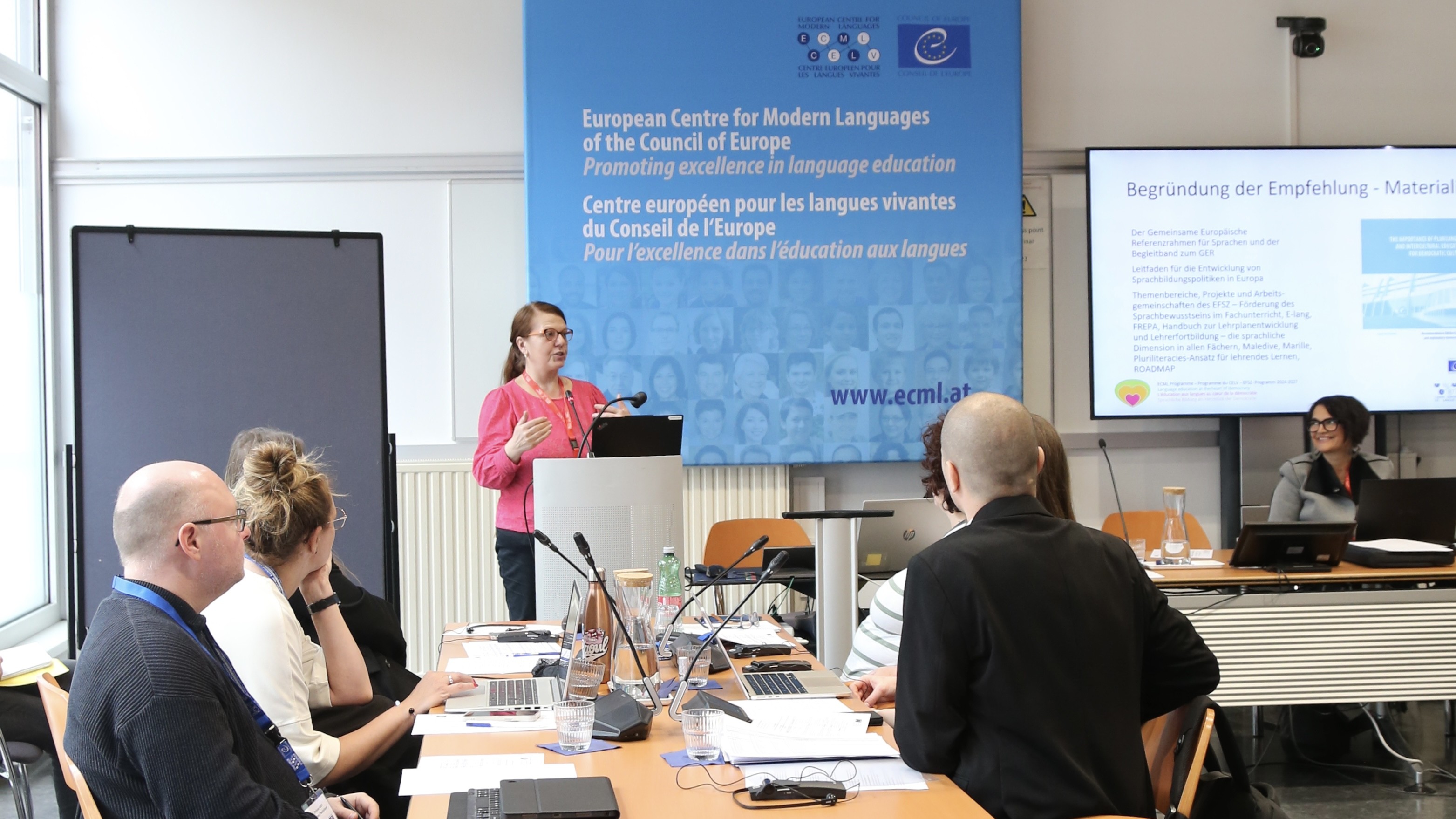 From 14–15 April 2026, the European Centre for Modern Languages (ECML) of the Council of Europe in Graz held a workshop for the project, “Using ECML resources to support plurilingual and intercultural education for democratic culture” (ARPIDE). Bringing together 29 participants from 25 countries, the event marked a key milestone in the ARPIDE project (2024–2026), which is part of the ECML’s four-year programme, Language Education at the Heart of Democracy. The workshop focused on using ECML resources to bridge the gap between policy and classroom practice in plurilingual and intercultural education.
Central to the ARPIDE project is Recommendation CM/Rec(2022)1 on the importance of plurilingual and intercultural education for democratic culture. This Recommendation, adopted by the Committee of Ministers of the Council of Europe, highlights the key role of language education in fostering democratic values, inclusion, and social cohesion. It encourages member states to ensure that language learning at all education stages helps develop plurilingual and intercultural competences. ARPIDE supports the implementation of this Recommendation by encouraging educators to draw on ECML resources to put its ambitious policy framework into practice.
Over the course of two days, participants explored the ARPIDE pathway – a practical process for identifying, evaluating, and adapting ECML resources for varied educational settings. Activities included group work, peer feedback, and hands-on sessions with innovative tools such as the ARPI chatbot, which helps users navigate the ECML website in order to select suitable resources in an interactive way. The workshop brought together professionals from a range of countries and backgrounds, providing perspectives that will help ensure the ARPIDE outputs are both relevant and adaptable across contexts.
The necessity of the ARPIDE project became particularly evident during the workshop. As project coordinator Kenia Puig remarked, ARPIDE shows how the Recommendation can be brought to life in real classroom practice. The workshop made clear the value of connecting top-down policy – such as national strategies and frameworks – with bottom-up innovation, reflecting the practical ideas and experience of educators on the ground. This combination is essential for translating the Recommendation into everyday educational practice.
ARPIDE’s focus on the use of ECML resources in the classroom complements recent developments within the Council of Europe’s Language Policy Programme and the launch of the Reflection and Planning Survey Tool for lower-secondary. This strategic self-assessment instrument is grounded in the same Recommendation and helps member states review and strengthen their language education systems with a view to promoting plurilingual and intercultural education for democratic societies. A Policy Toolbox directs decisionmakers and teacher educators to key Council of Europe resources.
As the ARPIDE project moves towards its final outputs – the ARPIDE pathway to use and adapt ECML resources, a chatbot to identify relevant resources and illustrations of ECML resources in practice – it is helping to advance plurilingual and intercultural education as a key level for strengthening our plural democracies.
- ECML project website “Using ECML resources for plurilingual and intercultural education for democratic culture” (2024-26) (available in English and German): www.ecml.at/arpide
24.04.2026
ARPIDE workshop in Graz brings policy closer to classroom practice
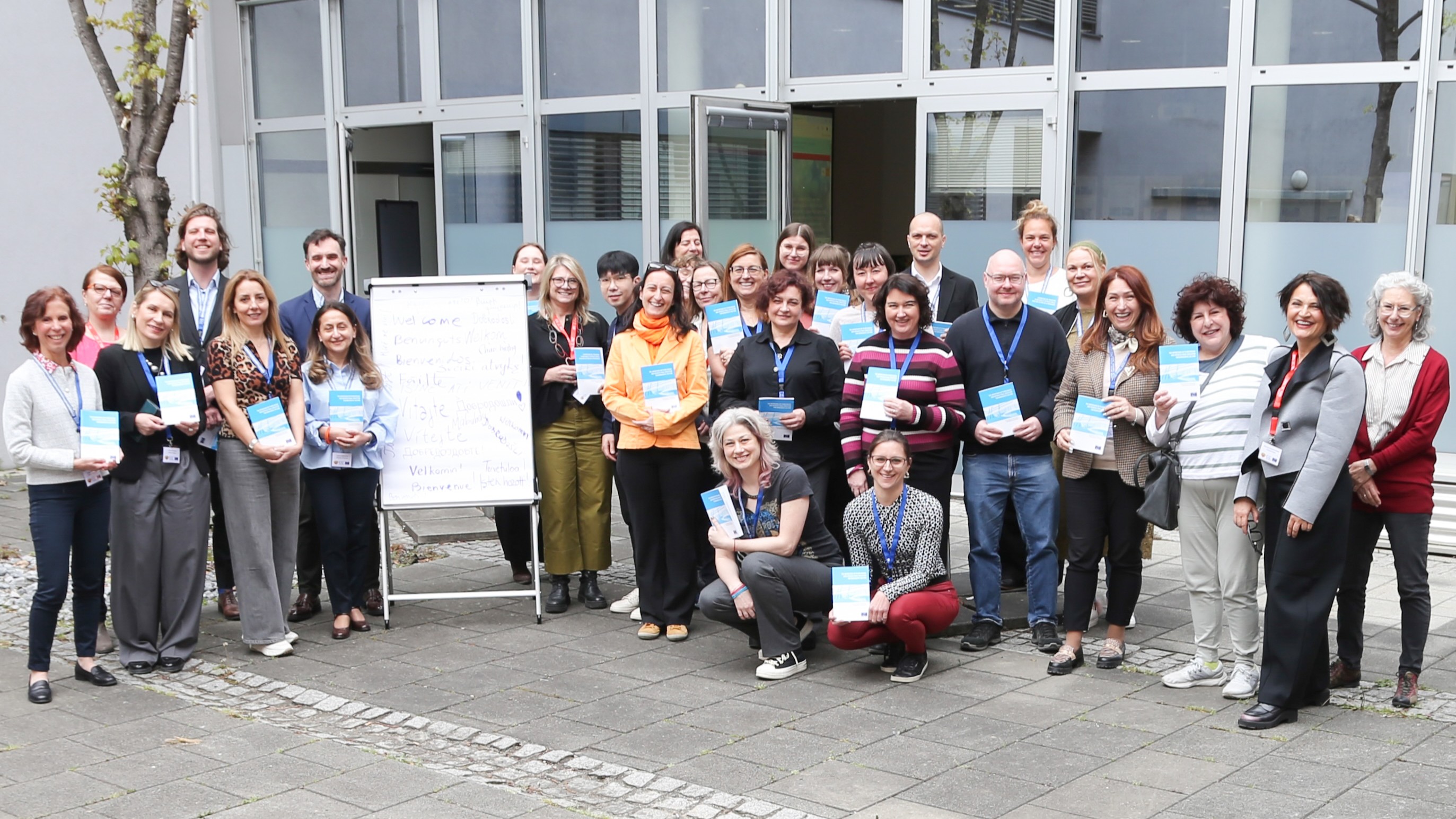 The two-day workshop of the ARPIDE project, held on 14–15 April 2026 at the European Centre for Modern Languages in Graz, brought together participants from across Europe to explore how to move from policy to practice in plurilingual and intercultural education for democratic culture. As part of the ECML programme “Language Education at the Heart of Democracy”, the workshop provided a space to review emerging ARPIDE outputs. Feedback gathered during the workshop will inform the further refinement of these tools and the development of the ARPIDE online platform, ensuring their relevance and usability across a wide range of educational contexts.
The workshop was grounded in the Principles and Measures of Recommendation CM/Rec(2022)1 on the importance of plurilingual and intercultural education for democratic culture. The event created a collaborative space for participants to engage with these Principles and consider how they can be translated into concrete educational practices.
The first day introduced participants to the aims of the ARPIDE project and provided an overview of plurilingual and intercultural education for democratic culture. The project team offered valuable insights into participants’ institutional and classroom realities, highlighting both shared challenges and context-specific needs. In the afternoon, participants met ARPI, the ARPIDE chatbot, testing its potential for identifying relevant ECML resources. While the tool was recognised as a promising support for navigating the wide range of available materials, discussions also highlighted areas for further development, including the need for greater usability and responsiveness.
The second day focused on the different stages of the ARPIDE pathway as a tool for linking policy to practice. Following an introduction to the pathway, participants worked in groups based on their professional profiles to identify their own needs, connect them to relevant Principles and Measures, and select ECML resources to support their work. Through hands-on tasks, reflection and peer exchange, participants explored how adapted resources can support plurilingual practices, foster intercultural understanding and contribute to education for democratic culture at classroom, school and system levels. A key focus was placed on adapting resources to specific linguistic, institutional and pedagogical contexts, emphasising that effective implementation depends not only on finding relevant materials, but also on critically reflecting, analysing, and adapting them. Engagement with a dissemination template further supported participants in considering how their work could be shared within their own institutions and professional networks. The workshop concluded with a reflective discussion on the ARPIDE pathway, where participants shared their insights.
The workshop marked an important step in the development of the ARPIDE project which reaffirms the importance of supporting educators not only with resources, but with structured frameworks that acknowledge complexity, respect professional judgement and value contextual diversity. The insights gathered will inform the further refinement of the ARPIDE pathway and related resources, supporting their relevance and usability across a wide range of European educational settings.
Authors: ECML ARPIDE team
- ECML project website “Using ECML resources for plurilingual and intercultural education for democratic culture” (2024-26) (available in English and German): www.ecml.at/arpide
16.04.2026
Workshop draws dozens to Graz to shape the future of plurilingual wellbeing
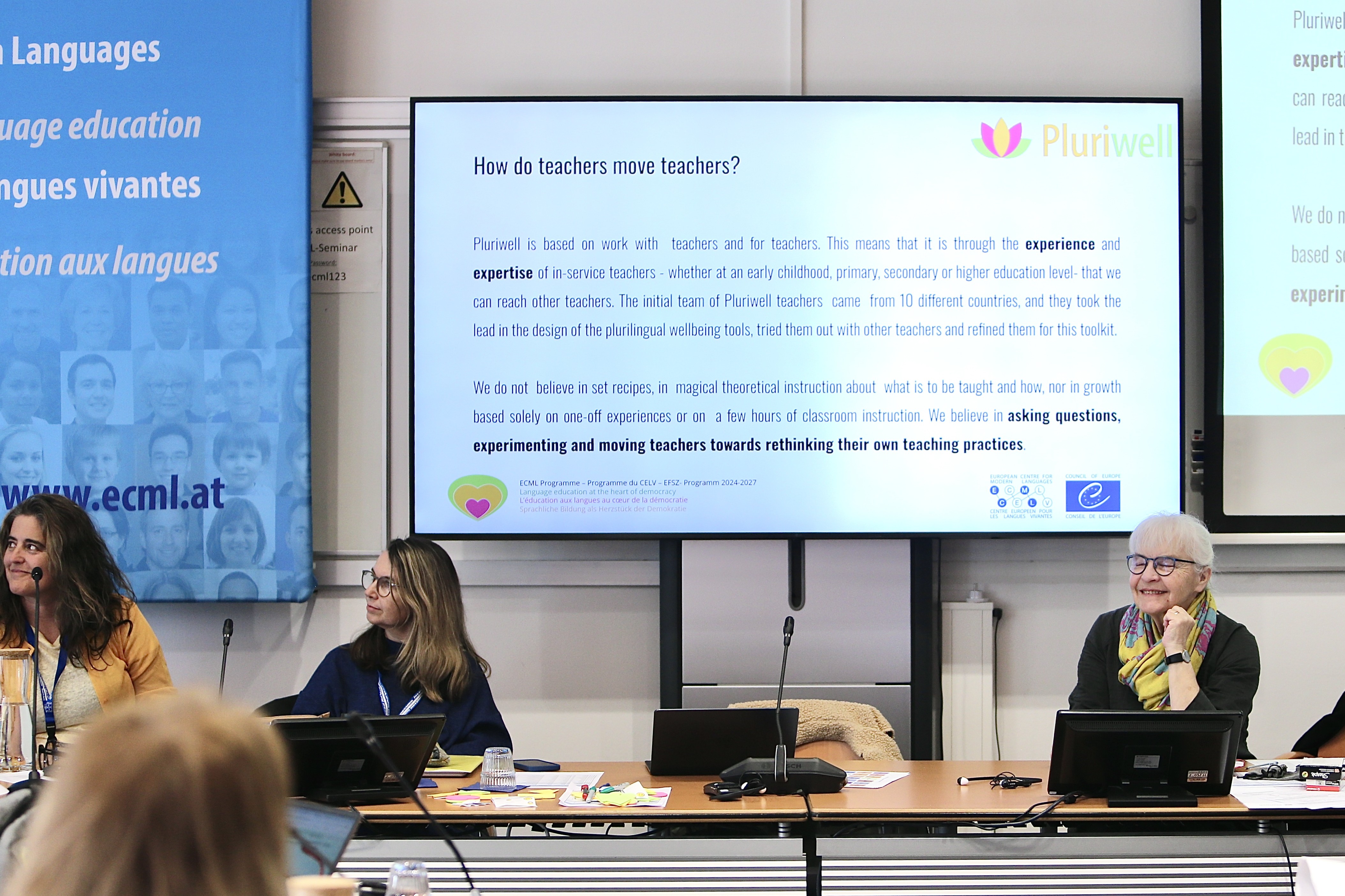 On March 25 and 26, the European Centre for Modern Languages played host to teachers, researchers and experts from around Europe for the Pluriwell workshop on “Fostering the plurilingual wellbeing of language teachers”. The event in Graz marked the culmination of more than two years of work on the Pluriwell project.
The sessions were attended by participants from 28 different Council of Europe member states, including working teachers, policymakers and university-based teacher educators. The workshop offered a chance for this diverse group of attendees to get their first look at the tools in the new Pluriwell toolkit. “Being able to try out our tools with such a diverse knowledgeable group of colleagues was immeasurably beneficial", said Pluriwell second language documentalist Gerit Jaritz.
Indeed, the participants brought with them a wide range of perspectives from very different language teaching and learning contexts. Emmanuel Julien, a French and Spanish teacher based in Andorra, observed that the plurilingual wellbeing tools could be of special interest to teachers in “reception” classrooms for migrant students. “With these students, who come primarily from South America, Ukraine, and the Philippines, the teachers, who are at least bilingual, use plurilingualism to break the ice, avoid language barriers, and facilitate a quick and positive integration into their new environment", he said.
One theme that emerged during the workshop discussions was the importance of recognizing the relationship between teacher and student wellbeing and how this can contribute to learning. As Frank Hansen, head teacher at Aarhus Kommune in Denmark noted, “There is a clear connection between teacher well-being and student well-being… It is important that we have an eye for and qualify the connection between multilingualism and wellbeing not only among students, but also among teachers. This is the core and great relevance of the Pluriwell project.”
Dolors Masats, a professor of language didactics at the Universitat Autònoma de Barcelona, is also a collaborator in the ECML project "A toolkit for implementing integrated didactics in language education", and she highlighted the relevance of plurilingual wellbeing to her own project. “[Participating] in a workshop entirely centred on the concept of teachers’ well-being raised my awareness of its key role in plurilingual education and of the need to explicitly refer to this perspective.” Masats highlighted the fact that “some Pluriwell techniques focus on helping teachers become aware of their own linguistic repertoires as a first step towards recognising those of their learners". She plans to incorporate parts of the Pluriwell approach into the materials selected for the Integrated Didactics Toolkit that is being created in the context of her ECML project.
The debates and discussions at the workshop provided valuable insights that will be incorporated into the final outcomes of the Pluriwell project. “The participants’ feedback on the toolkit will help us improve and refine the tools before they are published", said project coordinator Caterina Sugranyes. The attendees also contributed ideas that will help shape the forthcoming Pluriwell website. “The new website is expected to offer structured, user-friendly resources, while also supporting awareness and shared practice among teachers and teacher educators", said Chang Zhang, a web expert who attended the event from Ireland.
Incorporating a plurality of perspectives and contributions has been the norm for the Pluriwell project throughout. “Relationships and rapport are at the heart of wellbeing", Sugranyes said. “And they are also at the heart of this project, which has been a collective effort of the team, the participating teachers, the ECML, and now the workshop attendees. We are so grateful to all of them. Without them, this project would not have made sense to us, and we would not have been able to accomplish what we have done.”
Authors: ECML Pluriwell team