News
24.04.2026
From policy to practice: ARPIDE workshop advances plurilingual and intercultural education
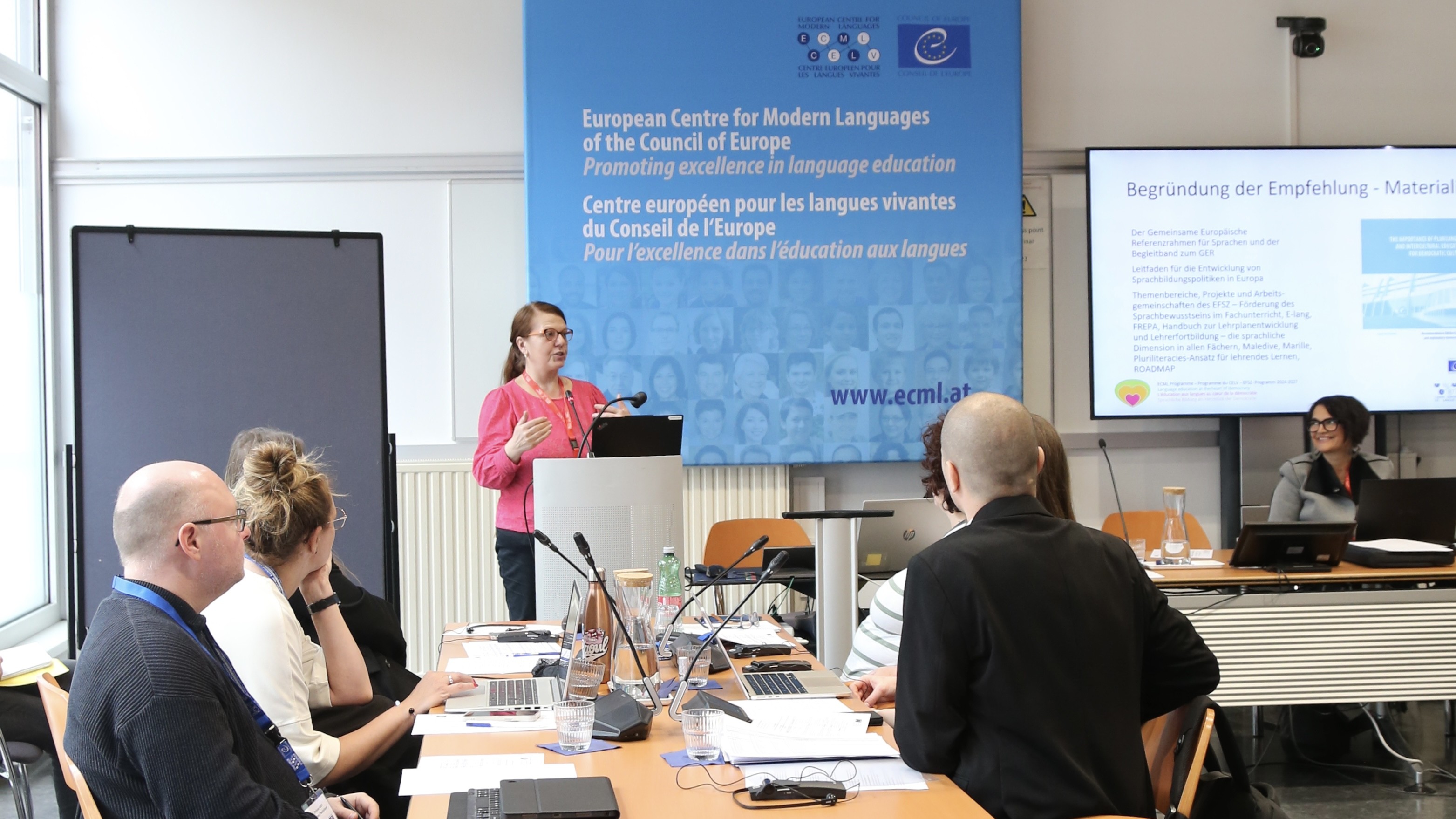 From 14–15 April 2026, the European Centre for Modern Languages (ECML) of the Council of Europe in Graz held a workshop for the project, “Using ECML resources to support plurilingual and intercultural education for democratic culture” (ARPIDE). Bringing together 29 participants from 25 countries, the event marked a key milestone in the ARPIDE project (2024–2026), which is part of the ECML’s four-year programme, Language Education at the Heart of Democracy. The workshop focused on using ECML resources to bridge the gap between policy and classroom practice in plurilingual and intercultural education.
Central to the ARPIDE project is Recommendation CM/Rec(2022)1 on the importance of plurilingual and intercultural education for democratic culture. This Recommendation, adopted by the Committee of Ministers of the Council of Europe, highlights the key role of language education in fostering democratic values, inclusion, and social cohesion. It encourages member states to ensure that language learning at all education stages helps develop plurilingual and intercultural competences. ARPIDE supports the implementation of this Recommendation by encouraging educators to draw on ECML resources to put its ambitious policy framework into practice.
Over the course of two days, participants explored the ARPIDE pathway – a practical process for identifying, evaluating, and adapting ECML resources for varied educational settings. Activities included group work, peer feedback, and hands-on sessions with innovative tools such as the ARPI chatbot, which helps users navigate the ECML website in order to select suitable resources in an interactive way. The workshop brought together professionals from a range of countries and backgrounds, providing perspectives that will help ensure the ARPIDE outputs are both relevant and adaptable across contexts.
The necessity of the ARPIDE project became particularly evident during the workshop. As project coordinator Kenia Puig remarked, ARPIDE shows how the Recommendation can be brought to life in real classroom practice. The workshop made clear the value of connecting top-down policy – such as national strategies and frameworks – with bottom-up innovation, reflecting the practical ideas and experience of educators on the ground. This combination is essential for translating the Recommendation into everyday educational practice.
ARPIDE’s focus on the use of ECML resources in the classroom complements recent developments within the Council of Europe’s Language Policy Programme and the launch of the Reflection and Planning Survey Tool for lower-secondary. This strategic self-assessment instrument is grounded in the same Recommendation and helps member states review and strengthen their language education systems with a view to promoting plurilingual and intercultural education for democratic societies. A Policy Toolbox directs decisionmakers and teacher educators to key Council of Europe resources.
As the ARPIDE project moves towards its final outputs – the ARPIDE pathway to use and adapt ECML resources, a chatbot to identify relevant resources and illustrations of ECML resources in practice – it is helping to advance plurilingual and intercultural education as a key level for strengthening our plural democracies.
- ECML project website “Using ECML resources for plurilingual and intercultural education for democratic culture” (2024-26) (available in English and German): www.ecml.at/arpide
24.04.2026
ARPIDE workshop in Graz brings policy closer to classroom practice
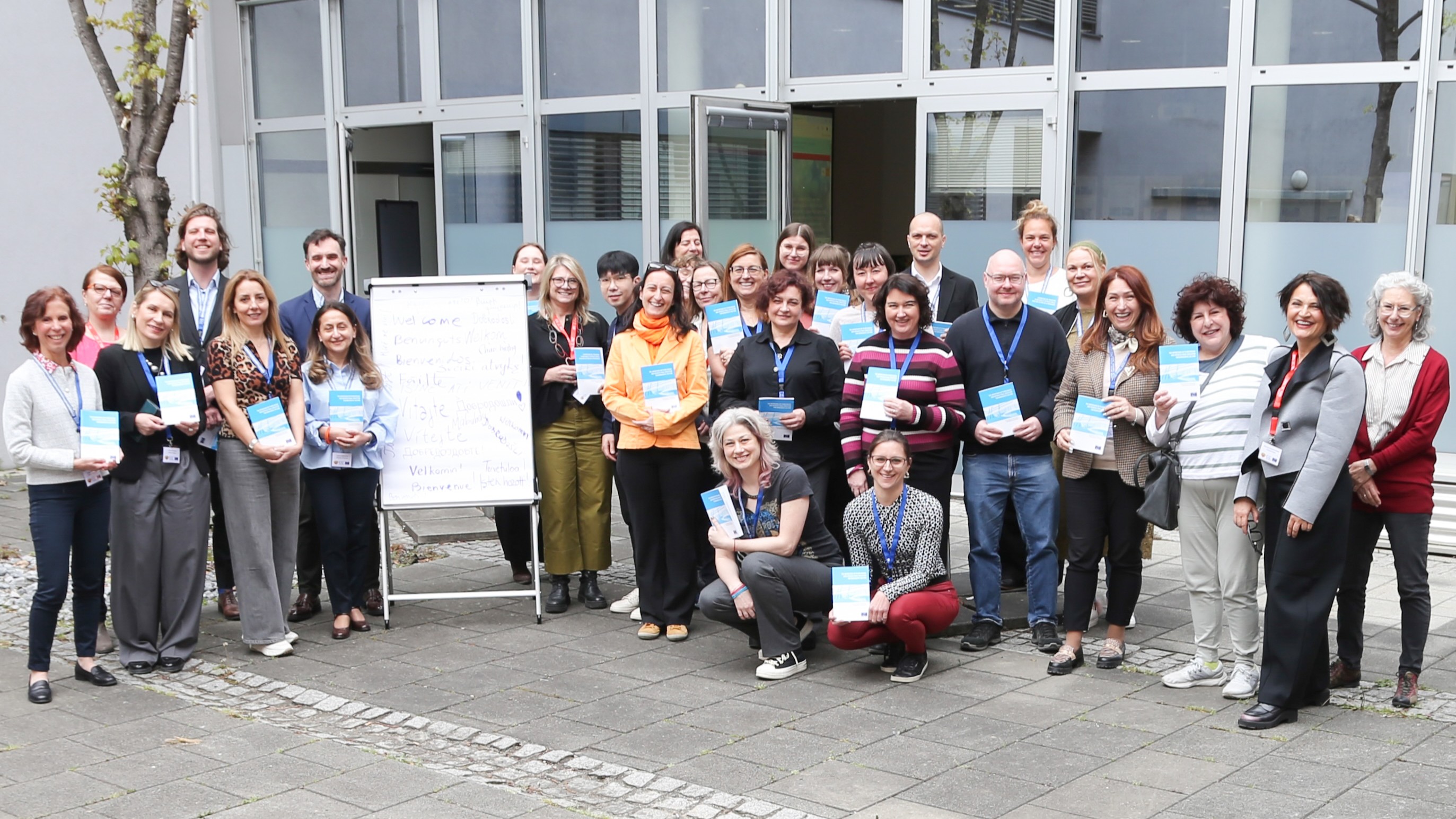 The two-day workshop of the ARPIDE project, held on 14–15 April 2026 at the European Centre for Modern Languages in Graz, brought together participants from across Europe to explore how to move from policy to practice in plurilingual and intercultural education for democratic culture. As part of the ECML programme “Language Education at the Heart of Democracy”, the workshop provided a space to review emerging ARPIDE outputs. Feedback gathered during the workshop will inform the further refinement of these tools and the development of the ARPIDE online platform, ensuring their relevance and usability across a wide range of educational contexts.
The workshop was grounded in the Principles and Measures of Recommendation CM/Rec(2022)1 on the importance of plurilingual and intercultural education for democratic culture. The event created a collaborative space for participants to engage with these Principles and consider how they can be translated into concrete educational practices.
The first day introduced participants to the aims of the ARPIDE project and provided an overview of plurilingual and intercultural education for democratic culture. The project team offered valuable insights into participants’ institutional and classroom realities, highlighting both shared challenges and context-specific needs. In the afternoon, participants met ARPI, the ARPIDE chatbot, testing its potential for identifying relevant ECML resources. While the tool was recognised as a promising support for navigating the wide range of available materials, discussions also highlighted areas for further development, including the need for greater usability and responsiveness.
The second day focused on the different stages of the ARPIDE pathway as a tool for linking policy to practice. Following an introduction to the pathway, participants worked in groups based on their professional profiles to identify their own needs, connect them to relevant Principles and Measures, and select ECML resources to support their work. Through hands-on tasks, reflection and peer exchange, participants explored how adapted resources can support plurilingual practices, foster intercultural understanding and contribute to education for democratic culture at classroom, school and system levels. A key focus was placed on adapting resources to specific linguistic, institutional and pedagogical contexts, emphasising that effective implementation depends not only on finding relevant materials, but also on critically reflecting, analysing, and adapting them. Engagement with a dissemination template further supported participants in considering how their work could be shared within their own institutions and professional networks. The workshop concluded with a reflective discussion on the ARPIDE pathway, where participants shared their insights.
The workshop marked an important step in the development of the ARPIDE project which reaffirms the importance of supporting educators not only with resources, but with structured frameworks that acknowledge complexity, respect professional judgement and value contextual diversity. The insights gathered will inform the further refinement of the ARPIDE pathway and related resources, supporting their relevance and usability across a wide range of European educational settings.
Authors: ECML ARPIDE team
- ECML project website “Using ECML resources for plurilingual and intercultural education for democratic culture” (2024-26) (available in English and German): www.ecml.at/arpide
24.10.2025
ARPI – a digital companion to guide users through ECML resources
On the 29-30 September 2025, the four team members of the ECML project “Using ECML resources to support plurilingual and intercultural education for democratic culture” convened in Graz for an intensive development meeting. The primary aim was to advance the project’s core output: a structured pathway designed to help stakeholders adapt and implement ECML resources in diverse educational contexts. The team dedicated significant time to refining the content and structure of this pathway, ensuring it is both practical and inclusive for educators, policymakers, and other key actors.
In addition to this, the team worked on the development of a supporting framework and explored the integration of a chatbot – ARPI – as a digital companion to guide users through the pathway. This innovative tool is intended to enhance accessibility and provide tailored support throughout the implementation process. The meeting also provided a valuable opportunity to review progress, align on final elements of the project, and ensure coherence across all outputs.
Parallel to these developments, the team finalised a glossary of key terms relevant to the project. Preparations for the upcoming workshop in April 2026 were also advanced, with plans to pilot both the pathway and ARPI during the event. This practical testing will be a crucial step in evaluating the usability and impact of the project’s outputs in real-world settings.
Kenia Puig i Planella, project coordinator
******************
ARPI, ein digitaler Begleiter für Nutzer:innen von EFSZ-Ressourcen
Am 29. und 30. September 2025 trafen sich die vier Mitglieder des EFSZ-Projekts „EFSZ-Ressourcen zur Förderung von mehrsprachiger und interkultureller Bildung für eine Kultur der Demokratie“ in Graz zu einem intensiven Arbeitstreffen. Hauptziel war es, das zentrale Projektergebnis – einen strukturierten Entwicklungsweg, der Akteur:innen bei der Umsetzung von EFSZ-Ressourcen in unterschiedlichen Bildungskontexten unterstützt, – voranzubringen. Das Team arbeitete insbesondere an der inhaltlichen und strukturellen Ausgestaltung dieses Weges, um ihn für Lehrkräfte, Bildungspolitiker:innen und andere relevante Zielgruppen praxisnah und inklusiv zu gestalten.
Ein weiterer Schwerpunkt lag auf der Entwicklung eines digitalen Begleittools, eines Chatbots namens ARPI, der Nutzer:innen bei der Orientierung durch den Entwicklungsweg unterstützen soll. Dieses innovative Instrument soll den Zugang erleichtern und gezielte Unterstützung bei der praktischen Anwendung bieten. Darüber hinaus wurde das Glossar des Projekts abgeschlossen sowie die Vorbereitungen für den Workshop im April 2026 vorangetrieben. Dabei soll der Entwicklungsweg gemeinsam mit ARPI erstmals erprobt werden – ein entscheidender Schritt, um die Anwendbarkeit und Wirkung der Projektergebnisse in der Praxis zu evaluieren.
Kenia Puig i Planella, Projektkoordinatorin