António Bárbolo Alves
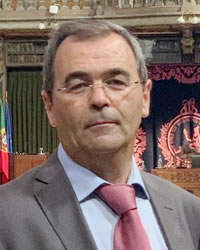 António Bárbolo Alves holds a BA in teaching Portuguese and French (University of Minho), an MA in teaching Portuguese language and literature from the same university and a Ph.D. in linguistics from the University of Toulouse – Le Mirail (France). From 1990 to 1995, he participated in the MINERVA Project at the University of Minho, and from 1997 to 2003, he was a lecturer in Portuguese language and culture at the University of Nice – Sophia Antipolis. He received grants from the National Board of Scientific and Technological Research (JNICT, 1995) and from the Foundation for Science and Technology (FCT, 2005–08). He is a secondary school teacher and a researcher at the Centro de Estudos em Letras at University of Trás-os-Montes e Alto Douro (UTAD, Portugal). His research focuses on Mirandese language and culture. He is a member of the Portuguese Linguistics Association, the Association Internationale pour la Défense des Langues et des Cultures Menacées (AIDLCM) and a corresponding member of the Lisbon Academy of Sciences.
Claudine Brohy
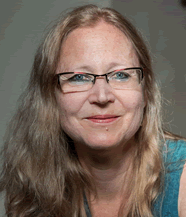 Claudine Brohy taught linguistics and German as a Foreign Language (DaF) at the bilingual University of Fribourg. Additionally, she worked in teacher education, and is interested in bilingual teaching, diglossia in a multilingual environment, efficient and beautiful teaching and learning materials, and language contact in general. She was also part of national and international working groups in the areas of language rights, minorities, language teaching, language policy, and multilingual (school) concepts, such as the Council of Europe and in university, cantonal, and national commissions.
Narrell Byrne
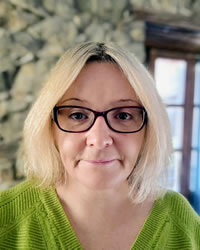 Narrell Byrne is a teacher of Irish, German, English as an Additional Language and has taught Irish in a multilingual setting where up to 50% of the learners were speakers of other languages. In addition, she has taught in Irish medium schools where the entire curriculum is taught through the medium of Irish.
Suzanne Dekker
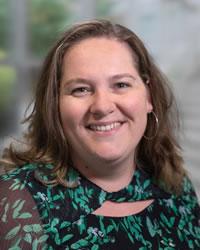 Suzanne Dekker has been working at the Mercator European Research Centre since October 2023. Her PhD research at the Multilingualism and Literacy lectorate at NHL Stenden University of Applied Sciences and the University of Groningen was about developing, implementing and evaluating multilingualism in Frisian primary schools. She worked as a researcher at the lectorate Multilingualism and Education of the University of Applied Sciences in Utrecht, where she was involved in projects on efficiently teaching English in primary schools, multilingualism and reading education, and professionalisation of news specialists. As a lecturer at the University of Groningen, she taught the subjects Language Variation: The Communicative Consequences, Language Planning and Policy, and Multilingualism and Education.
Johan Häggman, rapporteur
 Johan Häggman has more than 14 years of experience in promoting minority languages and advising the European Union on language policy. He is currently the coordinator in Brussels of the Federal Union of European Nationalities (FUEN), the main organization in the defense of national minorities, nationalities and indigenous linguistic groups in Europe.
Maria Begoña Iturgaiz Rodriguez
 Maria Begoña Iturgaiz Rodriguez works at the Institute for Euskara and language education, Basque Autonomous Community.