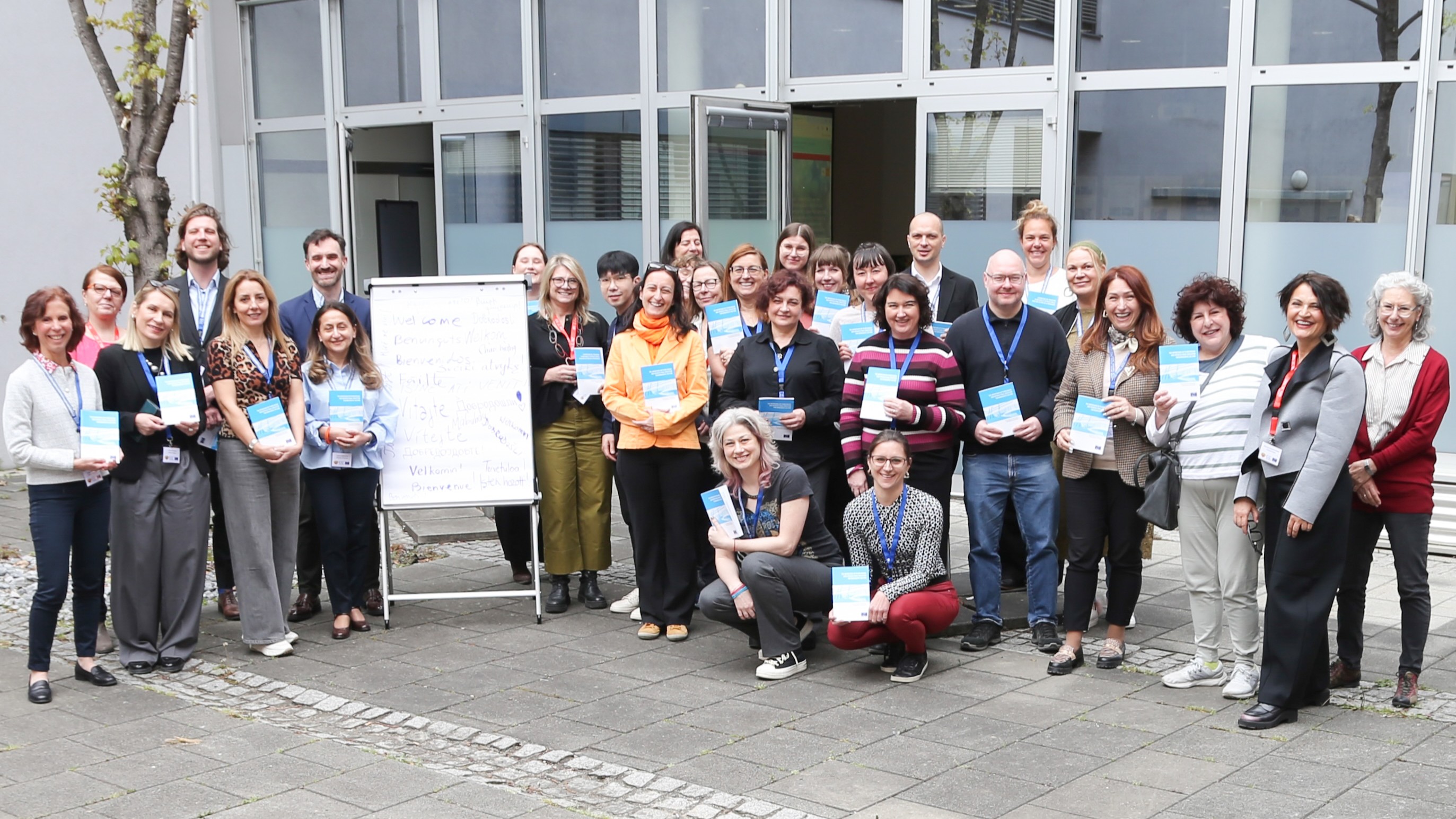
 The two-day workshop of the ARPIDE project, held on 14–15 April 2026 at the European Centre for Modern Languages in Graz, brought together participants from across Europe to explore how to move from policy to practice in plurilingual and intercultural education for democratic culture. As part of the ECML programme “Language Education at the Heart of Democracy”, the workshop provided a space to review emerging ARPIDE outputs. Feedback gathered during the workshop will inform the further refinement of these tools and the development of the ARPIDE online platform, ensuring their relevance and usability across a wide range of educational contexts.
The workshop was grounded in the Principles and Measures of Recommendation CM/Rec(2022)1 on the importance of plurilingual and intercultural education for democratic culture. The event created a collaborative space for participants to engage with these Principles and consider how they can be translated into concrete educational practices.
The first day introduced participants to the aims of the ARPIDE project and provided an overview of plurilingual and intercultural education for democratic culture. The project team offered valuable insights into participants’ institutional and classroom realities, highlighting both shared challenges and context-specific needs. In the afternoon, participants met ARPI, the ARPIDE chatbot, testing its potential for identifying relevant ECML resources. While the tool was recognised as a promising support for navigating the wide range of available materials, discussions also highlighted areas for further development, including the need for greater usability and responsiveness.
The second day focused on the different stages of the ARPIDE pathway as a tool for linking policy to practice. Following an introduction to the pathway, participants worked in groups based on their professional profiles to identify their own needs, connect them to relevant Principles and Measures, and select ECML resources to support their work. Through hands-on tasks, reflection and peer exchange, participants explored how adapted resources can support plurilingual practices, foster intercultural understanding and contribute to education for democratic culture at classroom, school and system levels. A key focus was placed on adapting resources to specific linguistic, institutional and pedagogical contexts, emphasising that effective implementation depends not only on finding relevant materials, but also on critically reflecting, analysing, and adapting them. Engagement with a dissemination template further supported participants in considering how their work could be shared within their own institutions and professional networks. The workshop concluded with a reflective discussion on the ARPIDE pathway, where participants shared their insights.
The workshop marked an important step in the development of the ARPIDE project which reaffirms the importance of supporting educators not only with resources, but with structured frameworks that acknowledge complexity, respect professional judgement and value contextual diversity. The insights gathered will inform the further refinement of the ARPIDE pathway and related resources, supporting their relevance and usability across a wide range of European educational settings.
Authors: ECML ARPIDE team